ADI Conference 2024 Report
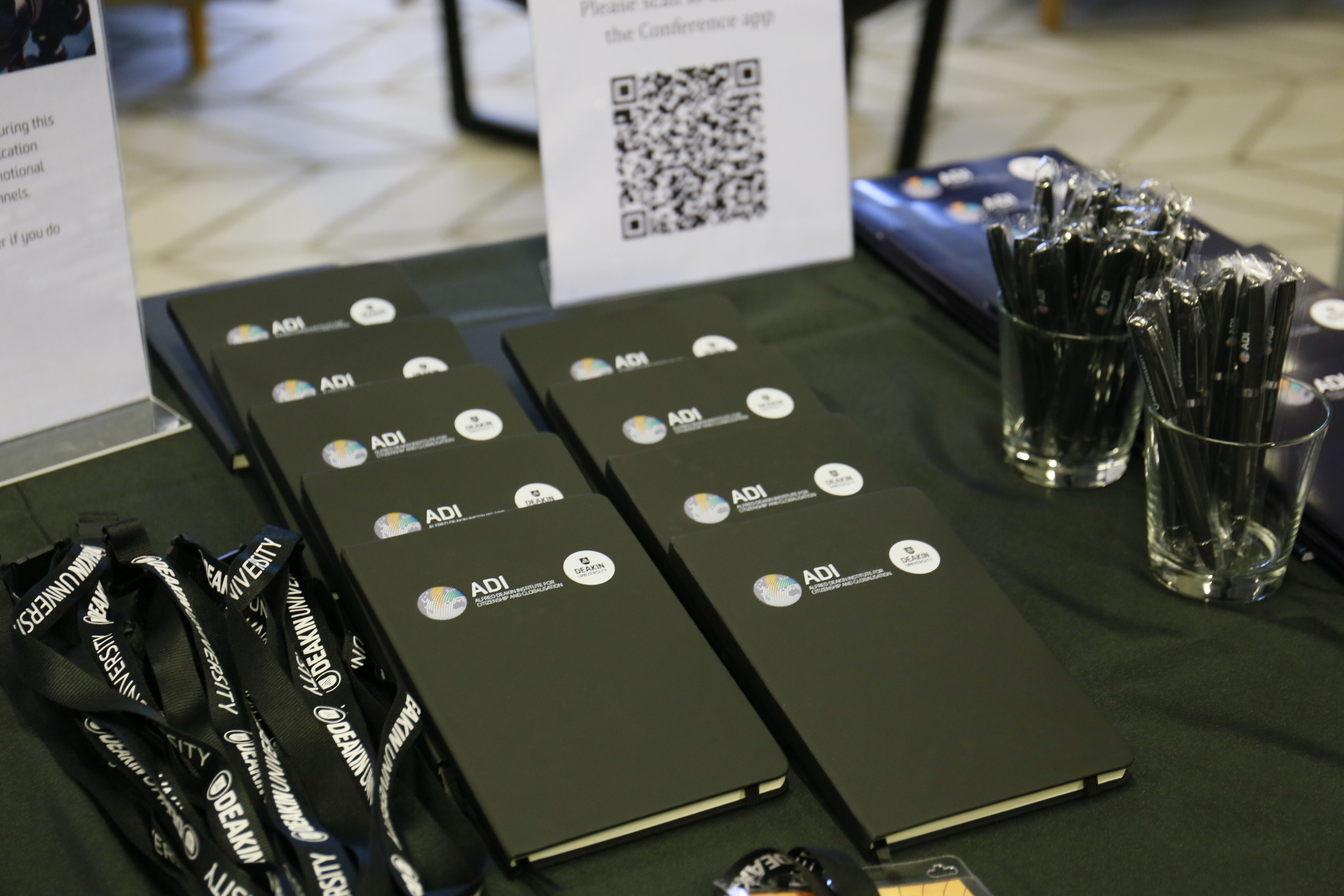
Sleek and functional Conference goodies from ADI! Photo courtesy of ADI.
What are the fundaments of hope in our world despite the challenges and barriers that confront us? How can the humanities and social sciences be impactful tools in the remaking of just, equal and flourishing futures for all?
These were some of the questions that resonated with me during the ADI Conference 2024, held from 25-26 November 2024 at the Deakin Burwood Corporate Center, Melbourne VIC, Australia, which I had the pleasure of attending in person after a long hiatus due to the pandemic. Organized by Deakin University's Alfred Deakin Institute (ADI) for Citizenship and Globalization, Australia's leading humanities and social science research institute, the two-day event was a fantastic opportunity to listen to and meet with global scholars and professionals whose work generate impactful insights and who have such genuine concern for creating meaningful, equitable and just futures for all. Now, I'm almost a week back in Baguio, and do I have the answers to these questions? Certainly not in any conclusive way, but here are some of my takeaways from the Conference:
- We still need to be human.
- Not all support is constructive.
- We do need stories.
We still need to be human
ADI Director and two-time Australian leader in the field of Human Migration (The Australian's Research Magazine 2025) Fethi Mansouri reflected on ADI Conference 2024's timing at a critical juncture in global history where a "succession of global crises in health, environment, security as well as conflict in the Middle East and Eastern Europe [...] push us to feel deeply not only about the social and political conditions of the world where we live, but also to question the universal ethics [that have emerged] post-COVID, chief among them the issue of social inequality." Indeed, at a time when researchers in the humanities and social sciences still struggle for the acknowledgement—and funding—they deserve,[1] ADI Conference 2024 drove home the enduring critical role of these disciplines in understanding and navigating life on Earth as we know it.
This was underscored by Professor Loretta Baldassar's opening keynote on migration, ageing, and her research team's work on transformative social and cultural care through social science and arts-based methodologies. A Professor of Anthropology and Sociology at Edith Cowan University (ECU) in Perth, Western Australia and the Director of the Social Ageing (SAGE) Futures Lab, Prof. Baldassar posed that the intersections of ageing, migration, and care reveal complex social dynamics that go beyond medicine and necessitate the social sciences as these issues impact "the whole person and the whole community." Without enough social supports, medical models are severely inadequate to address systemic vulnerabilities that affect the elderly population, most especially older migrants who often find themselves in care situations where they are vulnerable and isolated linguistically, socially and culturally. I found Loretta's words particularly insightful:
"To remain engaged in life, you must have that social relationship with your carers where your carers are creating your narratives for you that keep you human, that make you whole [...]. This is the work of social sciences. Medical work is not doing this, they're focused on the medicine."
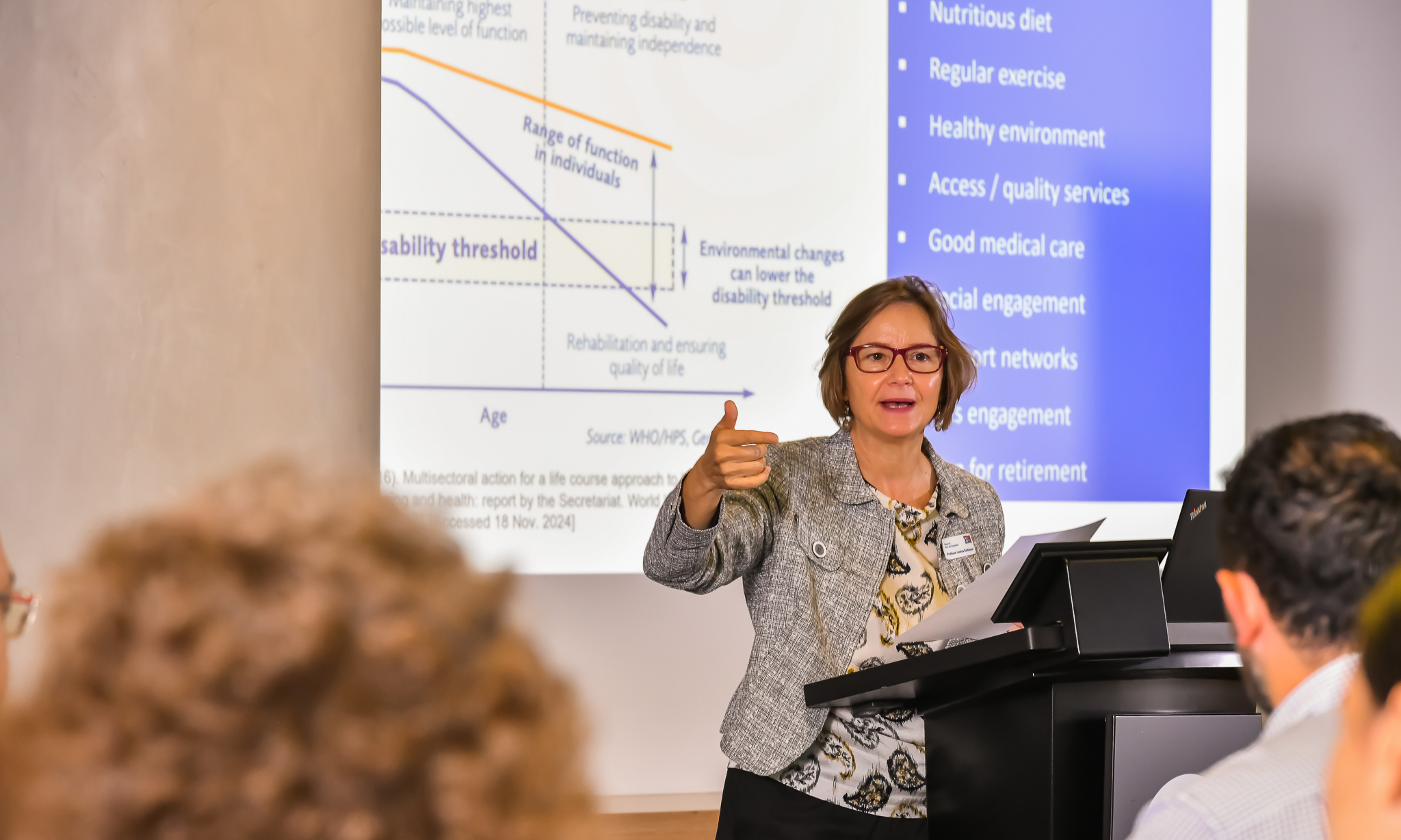
Prof. Loretta Baldassar during her keynote on Day 1 of ADI Conference 2024. Photo by Simon Fox, courtesy of ADI.
Not all support is constructive
Coming from a humanities and cultural studies background, this was my first time encountering the concept of "negative support" and it was quite fascinating to learn that having a few positive supports (i.e., friends, pets, family, etc.) is not as bad as the presence of just one negative support (i.e., disabling work environments, invalidating experiences, toxic coworkers, etc.), which could actually up your risk of negative health outcomes, including early death. Prof. Baldassar made a point to mention how important it was minimize negative supports and increase positive supports especially for ageing academics, who, once they retire, often find themselves with only colleagues and no friends. Despite being said in jest, this got me to reflecting about my own work environment, and how fortunate I am to have found good people in my community whom I can call my friends (and, I hope, can call me theirs).
I was also lucky to be in great company during the conference! Everyone was so genuine and warm, it was easy to exchange opinions and insights and ask questions as a first-timer at Deakin. I admit that I'm usually not the most sociable person, and find new crowds and situations particularly anxiety-inducing as an introvert but Nerissa, Sophie , Jen , Jasmine Chen, Ciara, and Michelle were so incredibly passionate and kind and made what could have been an intimidating academic event into a welcoming, intellectually stimulating experience. I was also glad to gain insights about doing a Doctorate in Australia from Melissa dela Cruz from Cebu (and current Deakin PhD candidate and scholar) and Nuri Veronika from Indonesia (who finished her PhD at Monash University).
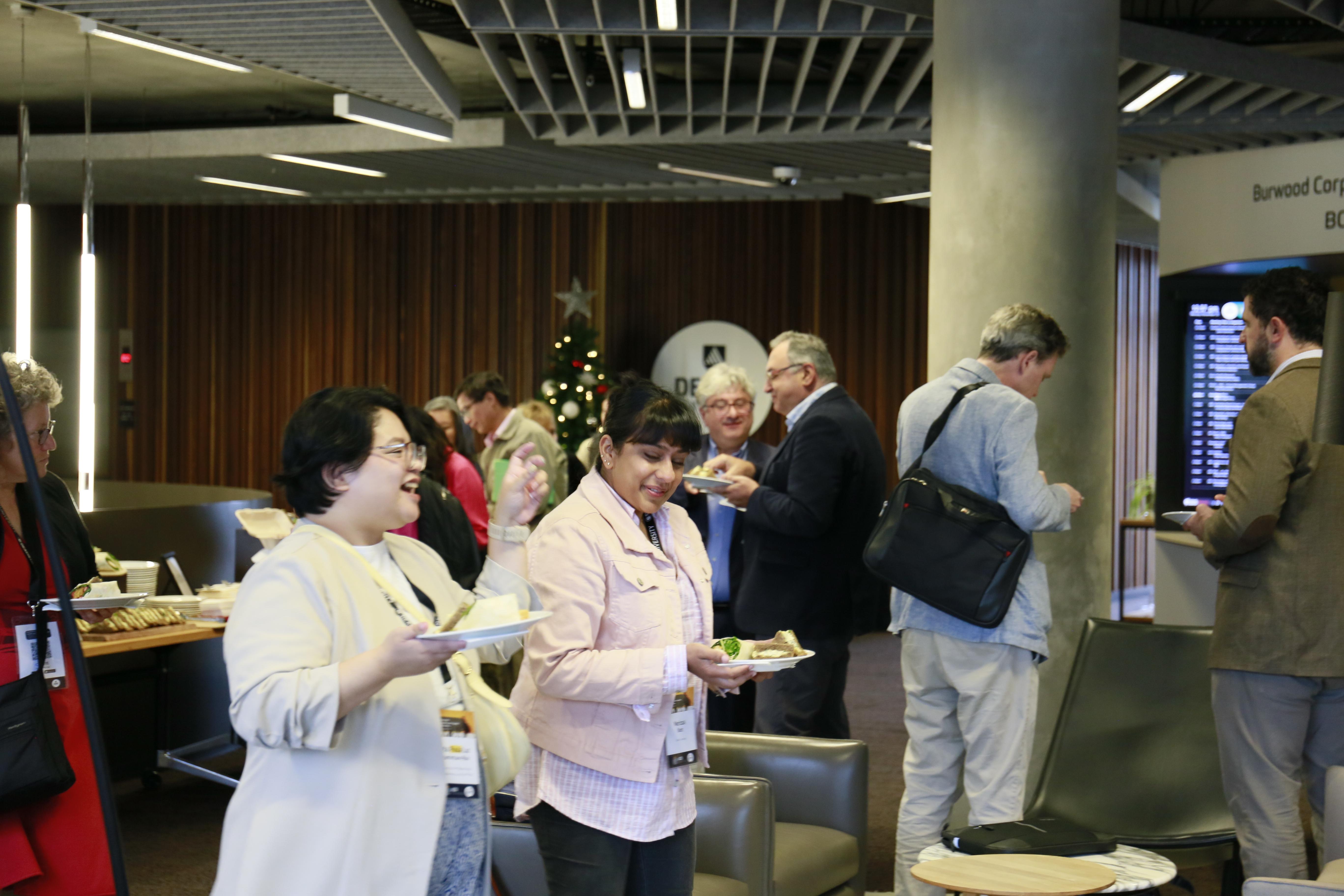
With Nerissa Butt of Deakin Uni, whose research interests are in biodiversity and climate change, enjoying the food and conversation! Photo courtesy of ADI.
We do need stories
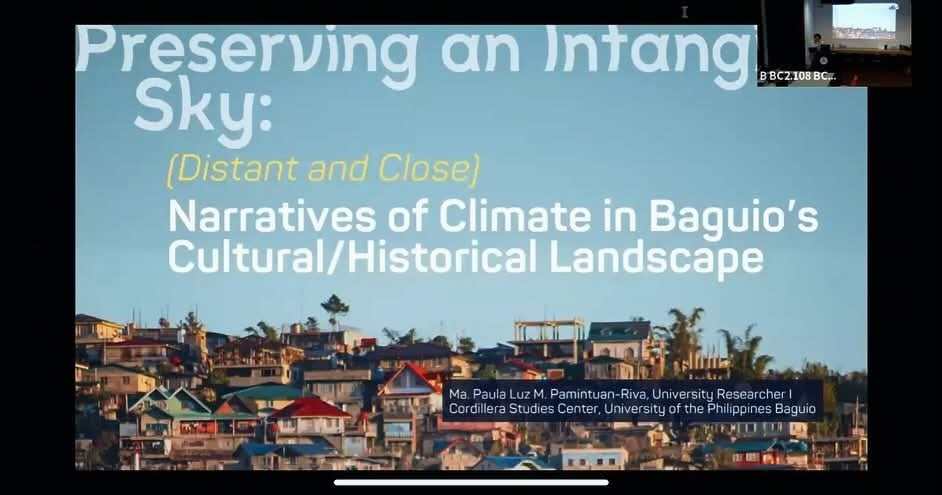
A very grainy still from my paper presentation. lol.
I also had the opportunity to present a paper at ADI Conference 2024, my first after a long while after parenthood, COVID and life in general decided to intervene. My paper is a work-in-progress on the notion of climate as heritage, especially in the context of my adoptive hometown of Baguio City. Through distant and close readings of archival reports by the Philippine Commission and of contemporary news articles about the city, my discussion aimed to expose tensions and faults in how we conceptualize heritage toward creative ways to understand and address issues about climate (and vice-versa). You can find the full recording of my presentation here.
At the outset, I was very nervous about presenting this paper—as one is wont to be when speaking to an academic audience about early-stage ideas—but I was relieved and encouraged by the supportive and constructive feedback I received about the paper's premise and methodology. On the Conference's second day, I found myself delightfully drawn to Professor Pam Nilan's plenary talk on "How Religion may Inform Youth Activism for Viability in the Global South", as she discussed how notions of environmental stewardship cut across religious divides for youth activists in Indonesia. Prof. Nilan is an Honorary Professor at the Alfred Deakin Institute and is a social science researcher whose focus is on youth, extremism, and decolonization. What resonated with me, in particular, were the ways in which her respondents found their environmentalism through passages in the Qur'an like "He has given you the earth for your heritage" (6:165) which to me connected with the notion that heritage we save at present for the future is one that is not always within our control. In my own paper, one of the core arguments is that what we do have control over are the narratives we make that end up affecting our relationship with the world and how we shape its future. Notwithstanding the struggle of the humanities and social sciences for recognition and funding, it is our ability to tell our stories that enables us to continue being human.
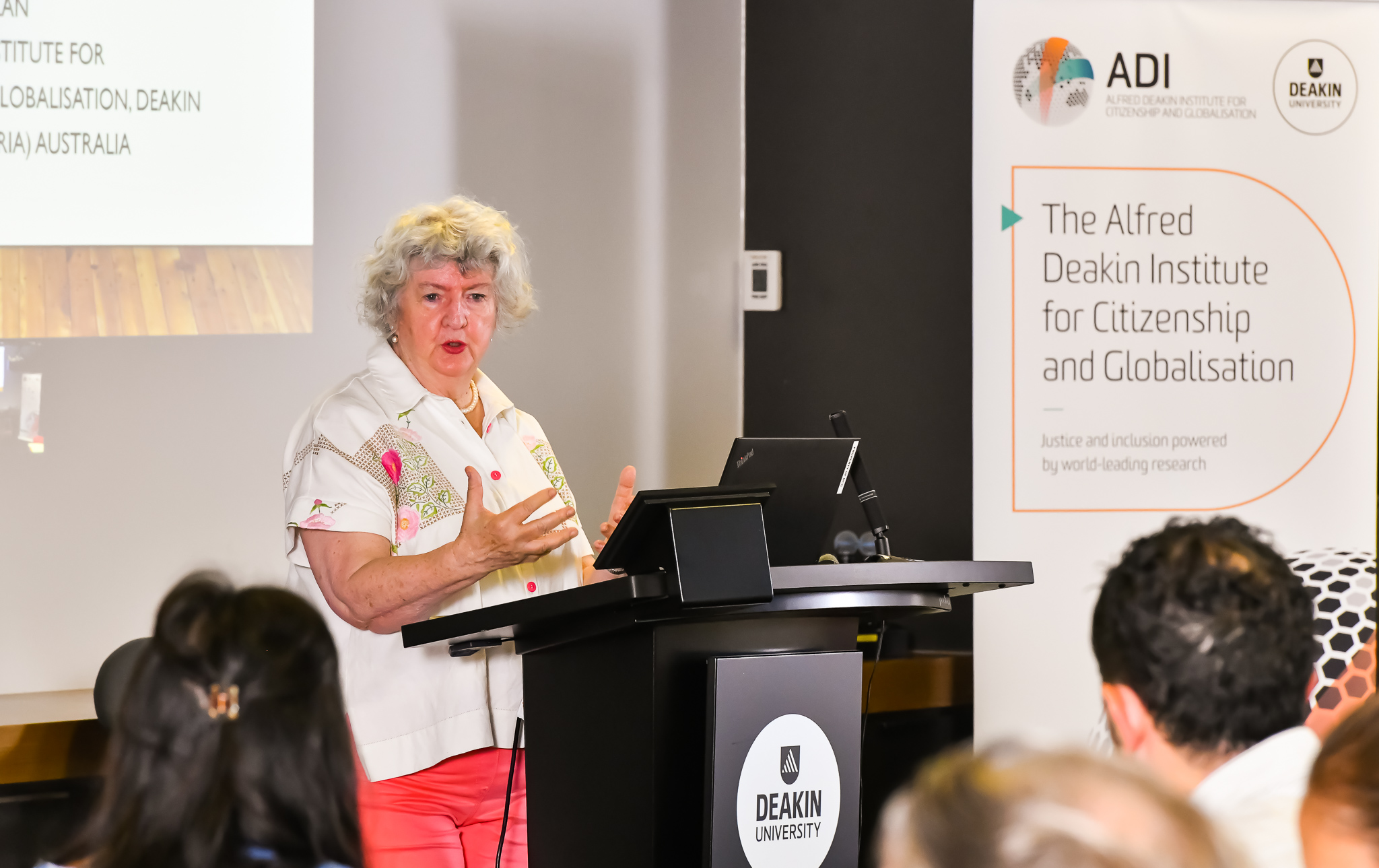
Prof. Pam Nilan during her keynote on Day 2 of ADI Conference 2024. Photo by Simon Fox, courtesy of ADI.
See ya!
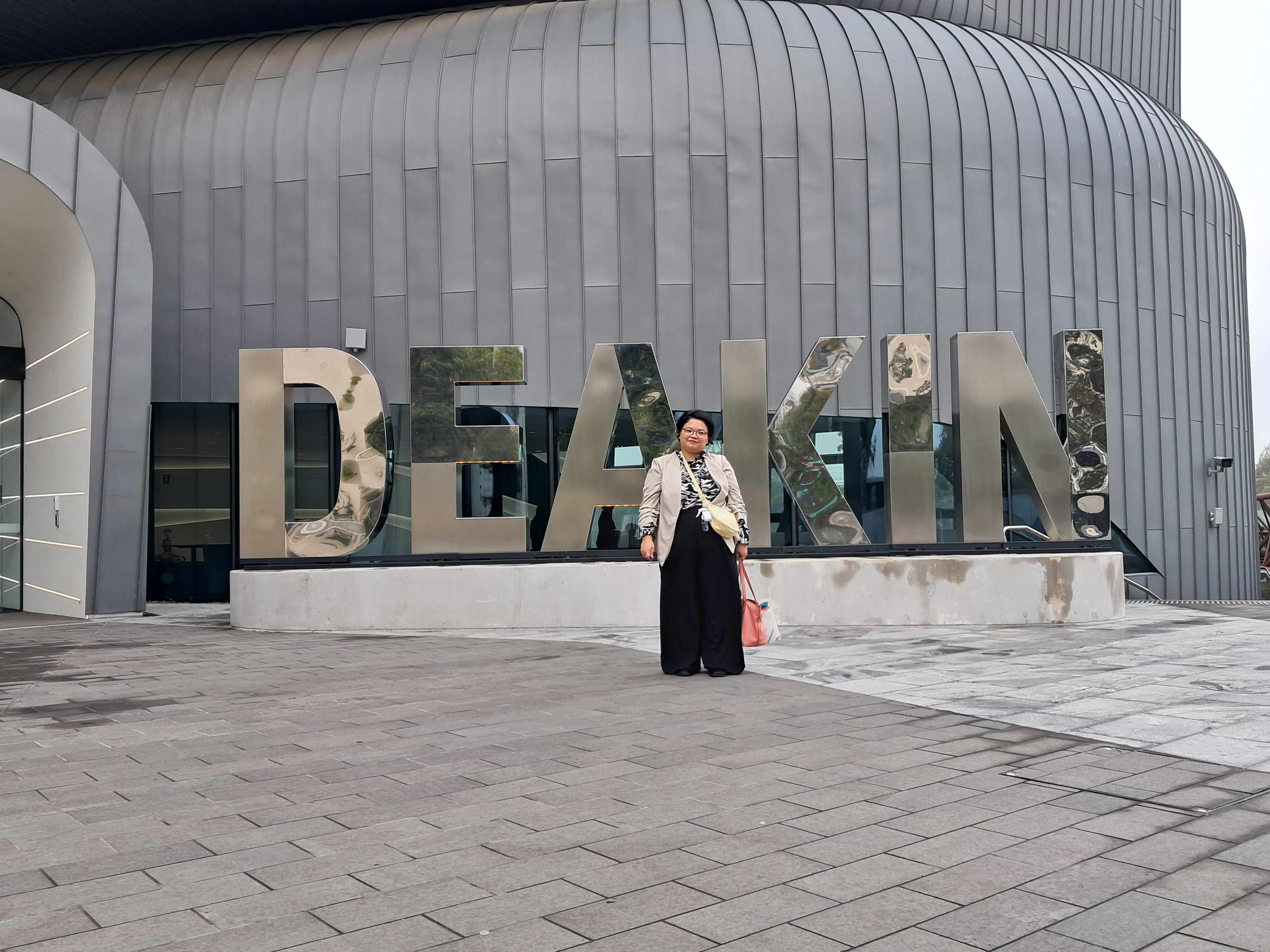
Me at the beautiful Deakin University Burwood Campus (hums One Short Day from the musical, Wicked)
Coming at a critical juncture in global history, the ADI Conference 2024 proved to be a critical intellectual forum for positioning humanities and social sciences as essential tools for understanding and navigating unprecedented contemporary challenges. I was truly fortunate to have this opportunity not just to listen to the ideas and discussions buoyed by this Conference, but even moreso to be able to contribute to these global conversations. I feel very blessed to receive funding from the University of the Philippines Baguio and the University of the Philippines System through the Research Dissemination Grant (RDG) program. This trip has truly been transformative and I look forward to more!
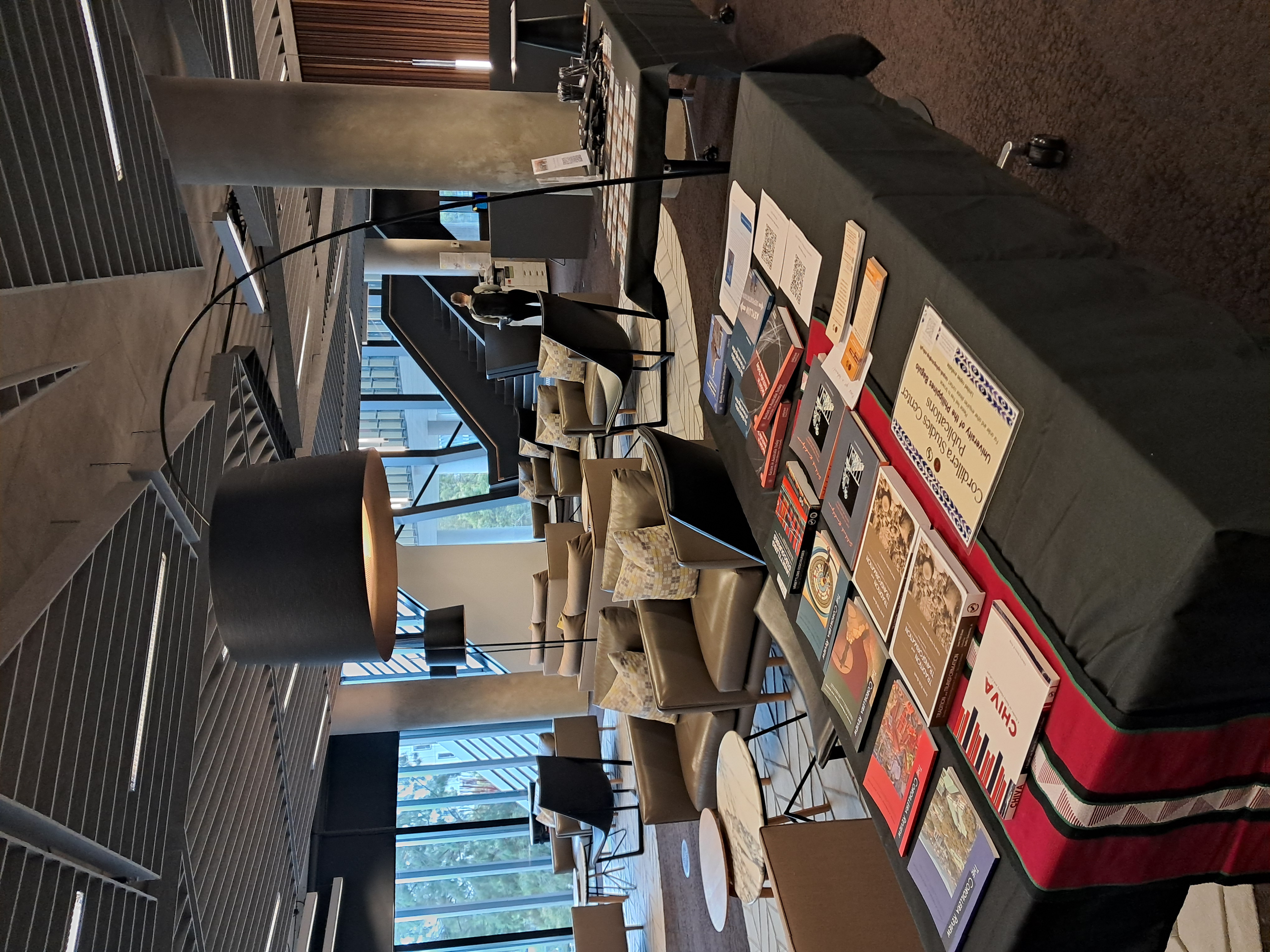
Last but not least! Thank you ADI for letting the CSC Publications Program display some of our titles. Congratulations on a successful Conference!
See, for example, the more recent cuts to humanities and social science research funds in Australia's neighboring country, New Zealand (i.e., Government's Marsden Fund cuts: All humanities, social sciences research funding slashed) or reports from the Swedish Universitetsläraren or insights from the 2021 State of the Social Sciences Report by the Academy of the Social Sciences in Australia. ↩︎